
naturasounds
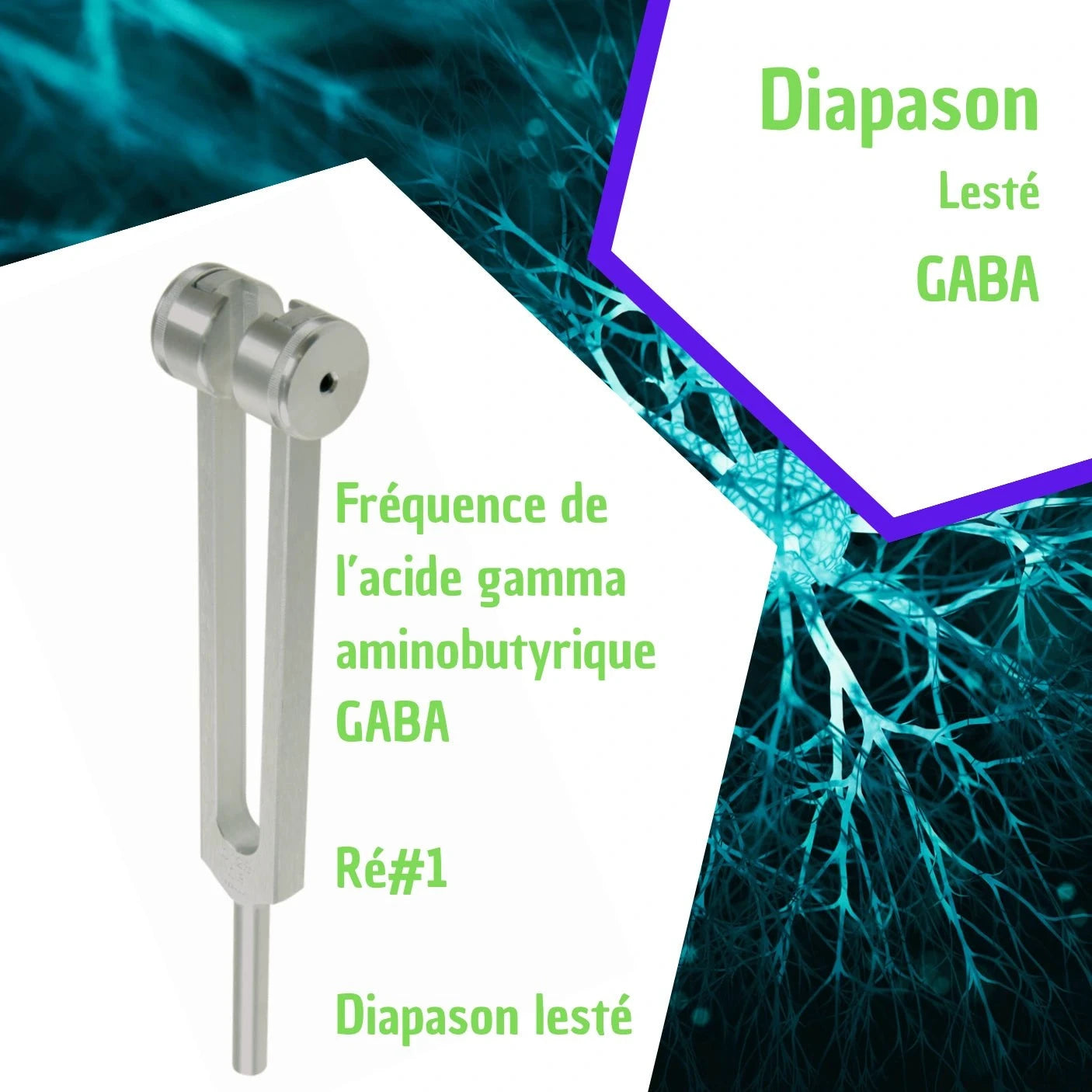
GABA Neurotransmitter Tuning Fork
GABA Neurotransmitter Tuning Fork
Couldn't load pickup availability
GABA Molecular Frequency
Primary Inhibitory Neurotransmitter - Application in Vibrational Sound Therapy
🔬 MOLECULAR IDENTITY
Chemical Formula
C₄H₉NO₂ - γ-Aminobutyric Acid (GABA / Gamma-Aminobutyric Acid)
Nomenclature
- IUPAC Name 4-Aminobutanoic acid
- Other names : Gamma-aminobutyrate, 4-aminobutyric acid, Gammalon, Gaballon
Fundamental Physico-Chemical Properties
- Molecular formula : C₄H₉NO₂
- Molecular mass : 103.12 g/mol
- Structure : Gamma amino acid (γ-amino acid)
- Appearance Colorless powder or crystals
- Decomposition point ~195°C
- Water solubility : 50 mg/mL (clear, colorless)
- Linear formula : NH₂(CH₂)₃COOH
Biological Context
GABA is a non-protein amino acid naturally present in animals, plants and microorganisms
Discovery :
- 1949: First discovery in potato tubers by Steward et al.
- 1950: Identified in the brains of mice and rats by Roberts & Frankel and Awapara et al.
- 1950s-1960s: Established as an inhibitory neurotransmitter
🎼 GABA HARMONIC SERIES
Derived Frequencies (Octaves of 76.85 Hz)
Infrasonic Frequencies :
- 19.21 Hz (H-2): Two octaves below
- 38.43 Hz (H-1): An octave below
Fundamental Frequency :
- 76.85 Hz (H0): Fundamental mistress - GABA signature
Higher Harmonics :
- 153.70 Hz (H1): First octave - D♯3
- 307.40 Hz (H2): Second octave - D♯4
- 614.80 Hz (H3): Third octave - D♯5
- 1229.60 Hz (H4): Fourth octave - D♯6
Musical Positioning
The frequency is 76.85 Hz is located between:
- Mi2 (82.41 Hz) and D♯2 (77.78 Hz)
- Very close to Mi♭2 (77.78 Hz) in the tempered range
Sound character : Deep bass, significant body vibration with an auditory component present.
🧠 GABA: NEUROTRANSMISSION AND FUNCTION
The Main Inhibitory Neurotransmitter
GABA is the the most important inhibitory neurotransmitter in the central nervous system
Fundamental Role
In 1950, researchers at Washington University School of Medicine used newly developed chromatography techniques to analyze protein-free mammalian brain extracts, discovering that GABA is metabolized from glutamic acid and accumulates in the mammalian central nervous system.
GABA synthesis :
Glutamate + GAD (enzyme) + Vitamine B6 (cofacteur) → GABA
GABA degradation :
GABA + GABA transaminase → Succinate semi-aldéhyde → Succinate (cycle de Krebs)
Mechanism of Action
GABA receptors
GABA-A receptors (ionotropic):
- Chloride channel (Cl⁻)
- Rapid inhibitory effect
- Membrane hyperpolarization
- Targets of benzodiazepines, barbiturates, alcohol
GABA-B receptors (metabotropics):
- Coupled with G proteins
- Slow and prolonged inhibitory effect
- Activation of K⁺ channels, inhibition of Ca²⁺ channels
- Targets of baclofen (muscle relaxant)
Inhibitory Function
When GABA binds to its receptor GABA-A, the channel opens and allows chloride ions (Cl⁻) to enter the neuron, lowering cellular excitability.
Result :
- ↓ Excessive neuronal activity
- ↓ Anxiety and stress
- ↑ Muscle relaxation
- ↑ Deep sleep
- ↓ Convulsions
Distribution within the Body
Main location :
- Central nervous system Brain and spinal cord (high concentration)
- Retina : Main inhibitory neurotransmitter
- Pancreatic β cells Regulation of insulin secretion
- Kidneys Low presence
Important GABA It does not generally cross the blood-brain barrier . Cerebral GABA is synthesized locally in the brain.
🎯 FREQUENCY CHARACTERISTICS 76.85 Hz
Acoustic Properties
Frequency range Deep bass / Audible infrasound
- Perception Marked body vibration + clear auditory perception
- Musical Octave : Close to the Mi♭2 (77.78 Hz)
- Wavelength ~4.46 meters in the air
- Tissue penetration Very deep, it resonates in the nervous structures
GABAergic Resonance
Theoretical targeting :
- Harmonization of GABAergic system cerebral
- Calming of the central nervous system
- Support for neuronal inhibition physiological
- Balance excitation/inhibition brain
Areas of potential action :
- Cerebral cortex (GABAergic neurons, interneurons)
- Hippocampus (memory regulation)
- Amygdala (emotion management)
- Cerebellum (motor coordination)
- Thalamus (sensory relay)
🎵 THERAPEUTIC APPLICATIONS
GABA Tuning Fork - Frequency 76.85 Hz
Technical Specifications
- Kind Weighted tuning fork for deep vibrations
- Precise frequency : 76.85 Hz (±0.1 Hz)
- Material High-quality medical alloy
- Resonance duration 15-20 seconds
- Weight 130-170g
- Length : 12-14 cm
Potential Therapeutic Effects
Based on the known functions of GABA:
Anxiolysis and calming :
- Reduction of generalized anxiety
- Deep mental calm
- Managing rumination
- Calming the limbic system
Sleep quality :
- Facilitating falling asleep
- Restorative deep sleep
- Reduction in nighttime awakenings
- Regulation of the sleep-wake cycle
Muscle relaxation :
- Reduction of muscle tension
- Release of muscle contractions
- Body flexibility
- Improved coordination
Emotional regulation :
- Mood stabilization
- Reduction of irritability
- Post-traumatic stress management
- Emotional balance
Anticonvulsant action :
- Prevention of neuronal hyperexcitability
- Support for epilepsy (supplementary)
- Protection against sensory overload
📋 USAGE PROTOCOLS
Protocol 1: Central Nervous System Calming
Objective Reduction of neuronal hyperactivity
Frequency : 76.85 Hz
-
Phase 1 - Cranial base (4 min)
- Occiput (base of the skull): Access to the brainstem
- Upper cervical region (C1-C2): Spinal cord-brain connection
-
Phase 2 - Brain Areas (5 min)
- Temples (temporal lobes): Emotional regulation
- Front (prefrontal cortex): Mental rumination
- Crown (vertex): Global integration
-
Phase 3 - Parasympathetic nervous system (3 min)
- Solar plexus: Vagal activation
- Heart: Cardiac coherence
Total duration : 12 minutes Optimal moment Evening, 1 hour before bedtime Frequency Daily for 21 days
Protocol 2: Deep Sleep Aid
Objective Facilitating sleep onset and promoting restful sleep
Frequency : 38.43 Hz (H-1) + 76.85 Hz (H0)
GABA + Melatonin Pre-Sleep Sequence :
-
86.55 Hz Melatonin (5 min) - Low frequency: Deep anchoring
- Soles of the feet
- Base of the column
- Induce Delta waves (0.5-4 Hz by beat effect)
-
76.85 Hz GABA (5 min) - Fundamental: Complete Relaxation
- Base of the skull
- Forehead
- Slow, synchronized breathing
Total duration : 10 minutes Timing 30 minutes before lights out Complement Cool room (18-19°C), total darkness
Protocol 3: Management of Acute Anxiety
Objective Rapid relief from an anxiety attack
Frequency : 76.85 Hz
Emergency application :
- Conscious breathing (3 deep cycles)
- Tuning fork 76.85 Hz on sternum/heart (2 min)
- Base of the skull (2 min)
- Solar plexus (2 min)
- Closing breath (1 min)
Total duration : 7 minutes Use On request, at the first signs of anxiety Complement Breathing techniques (heart coherence 365)
Protocol 4: Post-Stress Recovery (Burnout)
Objective Restoration of the exhausted nervous system
Frequency : 76.85 Hz + 107.40 Hz (H₂O)
Repair sequence :
-
H₂O 107.40 Hz (4 min): Brain cellular hydration
- Base of skull, temples, forehead
-
GABA 76.85 Hz (6 min): Neuronal inhibition/rest
- Same areas, prolonged application
- Visualization of brain "cooling"
- Integration (2 min): Silence, breathing
Total duration : 12 minutes Frequency twice a day for 30 days Important Complete rest, reduced mental activity
💎 EXCITATION/INHIBITION BALANCE
Optimal GABAergic Balance
The brain operates on a delicate balance. :
- Glutamate (excitator): Neural accelerator
- GABA (inhibitor): Neuronal brake
Possible imbalances :
GABA deficiency (too much excitement)
Demonstrations :
- Chronic anxiety
- Insomnia
- Mental hyperactivity
- Panic attacks
- Epilepsy
- Chronic pain (excessive excitability)
Excessive inhibition (too much GABA)
Demonstrations :
- Excessive drowsiness
- Lethargy
- Cognitive slowing
- Depression (in some cases)
Frequency Synergies
GABA (76.85 Hz) + CBD (58.59 Hz)
Synergy Dual relaxing action
- GABA: Direct neuronal inhibition
- CBD: Endocannabinoid system modulation
- Difference : 18.26 Hz (theta beat) Application Maximum Anti-Anxiety Protocol
GABA (76.85 Hz) + H₂O (107.40 Hz)
Synergy Hydration + soothing
- H₂O: Optimal brain hydration
- GABA: Neuronal rest
- Sequence : H₂O → GABA Application Mental recovery, burnout
GABA (76.85 Hz) + Magnesium (Mg, ~72.5 Hz)
Synergy Natural cofactor
- Mg activates GABA-A receptors
- Frequencies very close (4.35 Hz difference) Application Muscle cramps, tension
🔬 SCIENTIFIC BASIS AND LIMITATIONS
Established Functions of GABA (Molecule)
This has been scientifically proven :
Drugs that act as allosteric modulators of GABA receptors (GABA analogs or GABAergic drugs), or that increase the amount of available GABA, generally have relaxing, anti-anxiety, and anticonvulsant effects.
- Benzodiazepines (Valium, Xanax): Potentiate the action of GABA
- Barbiturates They directly activate GABA receptors
- Alcohol : Enhances the GABAergic effect (hence the relaxing effect)
- Antiepileptics Vigabatrin, tiagabine (GABA degradation inhibitors)
- Gabapentin, Pregabalin GABA analogues (although the mechanism is indirect)
Extrapolation to Sound Therapy
Open questions :
- Does the frequency 76.85 Hz really stimulate the GABAergic system?
- Do GABAergic neurons resonate at this specific frequency?
- Is there a placebo effect versus a real vibrational effect?
Transparency :
- ❌ No neurophysiological studies on the 76.85 Hz frequency
- ✅ Rigorous mathematical calculation of frequency
- ✅ Documented relaxing effects of low frequencies (neurology)
- ⚠️ Supposed mechanism of action, not clinically validated
⚠️ PRECAUTIONS AND CONSIDERATIONS
Nature of the Approach
IMPORTANT This sound therapy approach:
- ✅ Is NON-INVASIVE and without GABA intake
- ✅ Do not use NONE neurochemical substance
- ✅ Uses only acoustic frequencies
- ✅ Does not cause NOT of drug side effects
Crucial Distinction
⚠️ This method does NOT deliver GABA to the brain
- No neurotransmitters administered
- No oral GABA supplementation (which does not cross the blood-brain barrier)
- Vibrational action only
- No risk of addiction or tolerance
What is Used
✓ acoustic frequency 76.85 Hz derivative of the GABA mass
✓ Tuning forks or frequency generators
✓ Mechanical vibrations non-invasive
✓ No drug interactions
When to Consult
Does NOT replace :
- Prescribed anxiolytics (benzodiazepines)
- Anticonvulsants for epilepsy
- Psychiatric treatments
- Professional psychological support
Consult a doctor if :
- Persistent debilitating anxiety
- Chronic insomnia (>3 weeks)
- Repeated panic attacks
- Depressive symptoms
- Suicidal thoughts
🌿 NATURAL GABA IN DIET
Dietary Sources of GABA
GABA is widely present in fruits and vegetables, cereals, and edible mushrooms. Fresh strawberries and lychees are among the fruits and vegetables, while pumpkin seeds and wheat germ are among the cereals that have shown higher GABA content (≧1000 mg/kg).
Foods rich in GABA :
- Gabaron Tea Green tea enriched with GABA
- Pumpkin seeds >1000 mg/kg
- Wheat germ >1000 mg/kg
- Tomatoes Significant source
- Mushrooms : Flammulina velutipes (229.7 mg/kg)
- Fermented foods Kimchi, miso, tempeh
- Sprouted rice GABA production during germination
Important clarification Dietary GABA does not efficiently cross the blood-brain barrier. Its relaxing effect likely stems from its action on the enteric nervous system (the gut = "second brain").
📚 REFERENCES
Primary Sources
-
PubChem / NIST
- GABA molecular mass: 103.12 g/mol
- Chemical structure C₄H₉NO₂
-
NATURASOUNDS (Renaud Ruhlmann)
- Calculating the frequency of 76.85 Hz for GABA
- Einstein-Planck application
-
GABA Neurophysiology
- Discovered in 1950 (Roberts & Frankel, Awapara et al.)
- Established GABAergic Mechanism
- Role of the main inhibitory neurotransmitter
Scientific Context
- GABAergic Pharmacology Benzodiazepines, barbiturates, antiepileptics
- Central nervous system : Excitation/inhibition balance
- Nutrition and GABA Food sources and bioavailability
🧘 CONCLUSION
The frequency 76.85 Hz represents the vibrational signature of GABA, the brain's main inhibitory neurotransmitter, calculated from its molecular mass via the Einstein-Planck equation.
Key points :
- ✅ Rigorous scientific calculation based on C₄H₉NO₂ (103.12 g/mol)
- ✅ Theoretical targeting of the brain's GABAergic system
- ✅ Non-invasive application for relaxation and sleep
- ✅ Synergistic with CBD, H₂O, Mg for combined effects
- ⚠️ Hypothetical mechanism of action, not clinically validated
Usage recommendations :
- Protocols daily for anxiety and sleep (21 days)
- Application pre-sleep for insomnia
- Management anxiety attacks (7 min emergency)
- Combinations with other frequencies for synergy
- Does not replace not medical anxiolytic treatment
GABA, the guardian of inner calm, reminds us of the importance of neuronal rest. At 76.85 Hz, its frequency invites us to slow down, to switch off the hyperactive mind, and to rediscover the profound peace of inner silence.
Technical data sheet established based on physicochemical calculations (NATURASOUNDS) and neurophysiological data on GABA. Therapeutic application within the field of vibrational sound therapy. No neurotransmitters or psychoactive substances are used in this approach. This information is not a substitute for professional medical advice.
Partager