

naturasounds
Diapason Neurotransmitter - Melatonin
Diapason Neurotransmitter - Melatonin
Couldn't load pickup availability
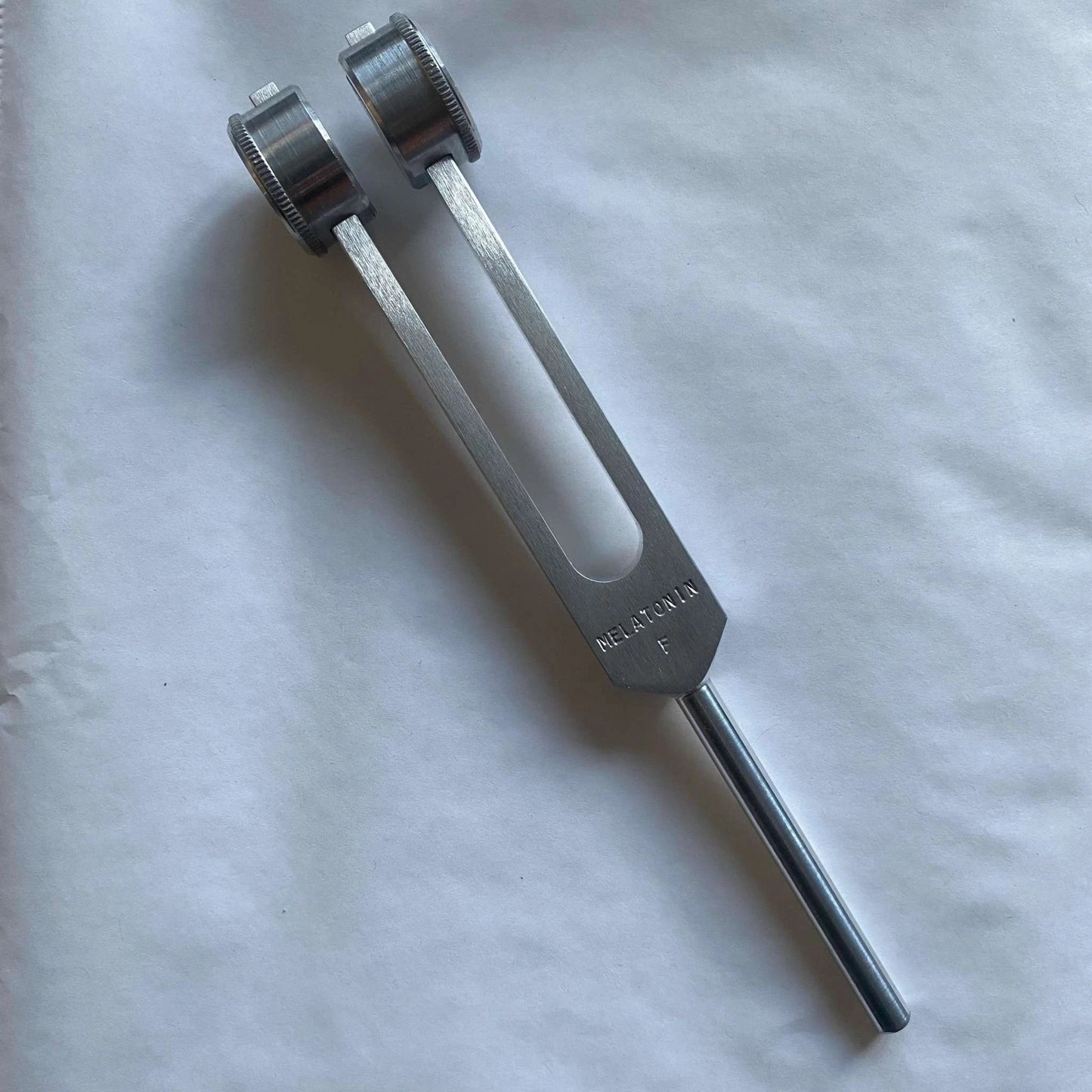
A deep and enveloping sound, close to F2, to mark the end of the day. The Melatonin 86.55 Hz tuning fork accompanies your relaxation rituals and sound therapy sessions, whether in the clinic or at home.
- 86.55 Hz frequency (±0.1 Hz), tuned and verified
- Weighted tuning fork: vibration felt on the body, 40 to 55 seconds of resonance
- For sound therapy practitioners, sound massage, and relaxation
- Supplied with [mallet / pouch / instructions]
The sound of the end of the day
Melatonin is the hormone our body produces when light levels drop: it is the biological signal for nighttime. The Melatonin tuning fork is inspired by this transitional moment. Its 86.55 Hz frequency, very close to F2, produces a deep, round, and slow sound that you hear as much as you feel.
Placed on the body, it diffuses a gentle vibration into the bones and tissues. Held near the ear, it offers a pure sound that helps slow down breathing and recenter before bedtime.
Why 86.55 Hz?
The NATURASOUNDS range associates each molecule with a frequency derived from its molecular mass, transposed by octaves into the audible range. For melatonin (C₁₃H₁₆N₂O₂, 232.28 g/mol), this method yields 86.55 Hz. This is a symbolic approach specific to vibrational sound therapy; it has not been the subject of scientific studies.
Series harmonics: 43.28 Hz · 86.55 Hz · 173.10 Hz · 346.20 Hz.
Technical specifications
| Characteristic | Value |
|---|---|
| Frequency | 86.55 Hz (±0.1 Hz) |
| Closest note | F2 (87.31 Hz) |
| Type | Weighted tuning fork (weights) |
| Material | [exact alloy, e.g., 6061 aluminum] |
| Resonance duration | 40 to 55 s |
| Weight | [120–170 g, to be specified] |
| Length | [12–14 cm, to be specified] |
| Supplied with | [mallet, pouch, instructions] |
| Warranty | [duration] |
How to use it: a 12-minute ritual
To be done 30 to 60 minutes before bedtime, with dimmed lights and the phone out of the room.
- Set the scene (2 min): strike the tuning fork against the mallet or your knee, hold it near each ear, and follow the sound until it fades away.
- Upper body (4 min): place the stem on the crown of the head, then on the nape of the neck and the sternum.
- Downward progression (4 min): shoulders, solar plexus, then soles of the feet to finish with grounding.
- Breathing (2 min): tuning fork near the body, inhale for 4 s, exhale for 6 s, following the rhythm of the vibration.
Tip: for a deeper sound, combine it with the 43.28 Hz tuning fork (lower octave). You can also use the Serotonin tuning fork in the morning to bookend your day.
For whom?
- Practitioners: sound therapists, massage therapists, reflexologists, sophrologists, yoga teachers
- Individuals looking for a screen-free evening ritual
- A gift idea for sound wellness enthusiasts
Sleeping well: the foundations that matter
The tuning fork complements good sleep habits; it does not replace them. The basics: morning daylight, screens off 1 to 2 hours before bed, a dark and cool room (18–19 °C), regular schedules, no caffeine after 3 PM.
Frequently Asked Questions
Does the Melatonin tuning fork contain melatonin?
No. It is an acoustic instrument: it does not deliver any substance and does not replace medical treatment.
Does it help with sleep?
It is designed as a relaxation tool for an evening ritual. No study has evaluated the effect of the 86.55 Hz frequency on sleep. In case of chronic insomnia, please consult a doctor.
What is the difference between a weighted and non-weighted tuning fork?
The weighted version features weights that extend the vibration: it is placed on the body. The non-weighted version is primarily used near the ears.
Is training required to use it?
No for personal use. Practitioners can follow [link to training, if offered].
Are there any precautions?
Do not place it on a wound, pacemaker, or implant, nor on the abdomen of a pregnant woman. Seek medical advice in case of epilepsy.
Legal notice (footer)
Sound wellness item. Does not constitute a medical device and does not replace a medical consultation. Consult a physician in the event of persistent sleep disorders, snoring with sleep apnea, or marked daytime sleepiness.
Partager