
naturasounds
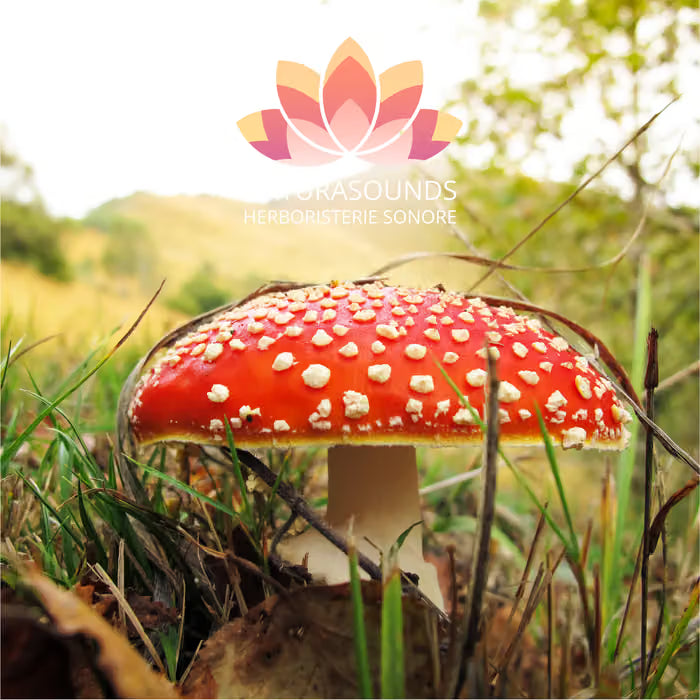
🎧 Medicinal Chant of Amanita Muscaria - 429.62 Hz - H2O / 30 minutes
🎧 Medicinal Chant of Amanita Muscaria - 429.62 Hz - H2O / 30 minutes
Regular price
€15,00 EUR
Regular price
Sale price
€15,00 EUR
Unit price
per
Taxes included.
Shipping calculated at checkout.
Couldn't load pickup availability
Amanita muscaria has been used by various tribes and peoples throughout history for its hallucinogenic and ritualistic properties. Here is a list of some of the groups known to have used this mushroom:
Historical Peoples and Tribes
Sami:
The Sami, an indigenous people of the Arctic region of Scandinavia (Norway, Sweden, Finland, and Russia), are well-known for their traditional use of Amanita muscaria in shamanic and ritualistic contexts. Shamans (or "noaides") used it to enter trances and communicate with the spirit world.
Khanty and Mansi (Ostyak and Vogul):
These indigenous peoples of Western Siberia also used Amanita muscaria in shamanic practices. The mushroom was consumed for its psychotropic effects to facilitate communication with spirits.
Koryak:
The Koryak of the Kamchatka Peninsula in Russia had a long tradition of using Amanita muscaria. They often drank the urine of individuals who had consumed the mushroom, as this helped reduce toxic effects while retaining the hallucinogenic properties.
Chukchi:
Located in the far northeast of Russia, the Chukchi also used Amanita muscaria in their shamanic rituals to achieve trance states and visions.
Source: https://www.boomzlife.com/blogs/news/lhistoire-de-lamanita-muscaria-et-de-son-utilisation-ancestrale?srsltid=AfmBOoo3MYln_SZncoAJ3mayVaml6WWlg44pXs8qmRUSXdTChiZc_o6
Historical Peoples and Tribes
Sami:
The Sami, an indigenous people of the Arctic region of Scandinavia (Norway, Sweden, Finland, and Russia), are well-known for their traditional use of Amanita muscaria in shamanic and ritualistic contexts. Shamans (or "noaides") used it to enter trances and communicate with the spirit world.
Khanty and Mansi (Ostyak and Vogul):
These indigenous peoples of Western Siberia also used Amanita muscaria in shamanic practices. The mushroom was consumed for its psychotropic effects to facilitate communication with spirits.
Koryak:
The Koryak of the Kamchatka Peninsula in Russia had a long tradition of using Amanita muscaria. They often drank the urine of individuals who had consumed the mushroom, as this helped reduce toxic effects while retaining the hallucinogenic properties.
Chukchi:
Located in the far northeast of Russia, the Chukchi also used Amanita muscaria in their shamanic rituals to achieve trance states and visions.
Source: https://www.boomzlife.com/blogs/news/lhistoire-de-lamanita-muscaria-et-de-son-utilisation-ancestrale?srsltid=AfmBOoo3MYln_SZncoAJ3mayVaml6WWlg44pXs8qmRUSXdTChiZc_o6
credits
released January 21, 2026
What is muscimol?
Muscimol is an alkaloid naturally present in certain species of mushrooms, notably the fly agaric (Amanita Muscaria). It is responsible for the psychotropic effects of these mushrooms, which have been used for centuries in various cultures for religious or shamanic purposes. Muscimol and Amanita Muscaria are therefore closely linked. Amanita muscaria is the most well-known mushroom to contain muscimol. The latter acts by binding to GABA-A receptors in the brain, which are the same receptors responsible for the calming effects of benzodiazepines and alcohol. However, unlike these substances, muscimol produces hallucinogenic effects, altering sensory perception, reality, and sometimes even time.
How is muscimol produced?
Muscimol is naturally synthesized in mushrooms by the conversion of another compound called ibotenic acid. Here is a simplified overview of this conversion:
- Ibotenic acid: The precursor to muscimol, ibotenic acid, is synthesized by the mushroom.
- Decarboxylation: Ibotenic acid undergoes decarboxylation, meaning a molecule of carbon dioxide (CO2) is eliminated.
- Muscimol formation: This chemical reaction produces muscimol.
Thus, the process of creating muscimol is a natural process of the mushroom, especially that of Amanita muscaria. It is produced by enzymatic conversion of ibotenic acid, and it can be artificially synthesized, although large-scale production is more common via mushroom extraction.
Source: www.lepetitbotaniste.com/blog/muscimol-avis-effet-b80.html
These sound essential oils are for sale to benefit our research in electrophysiology and molecular sound chemistry.
Thank you for your wonderful participation!
These melodies are produced by the plant itself and its molecular activity that we measure and record.
Recorded with the Instruo Pocket Scion with 4 voices to form this beautiful polyharmony.
I encoded it in .wav format with a sampling frequency of 48Khz in 24-bit and tuned according to Einstein / Planck's equation (h.f = mc2) to the water frequency of 429.62 Hz.
Enjoy listening!
For any further information, collaboration/partnership requests or otherwise, please send me a message.
contact: renaud@naturasounds.org
What is muscimol?
Muscimol is an alkaloid naturally present in certain species of mushrooms, notably the fly agaric (Amanita Muscaria). It is responsible for the psychotropic effects of these mushrooms, which have been used for centuries in various cultures for religious or shamanic purposes. Muscimol and Amanita Muscaria are therefore closely linked. Amanita muscaria is the most well-known mushroom to contain muscimol. The latter acts by binding to GABA-A receptors in the brain, which are the same receptors responsible for the calming effects of benzodiazepines and alcohol. However, unlike these substances, muscimol produces hallucinogenic effects, altering sensory perception, reality, and sometimes even time.
How is muscimol produced?
Muscimol is naturally synthesized in mushrooms by the conversion of another compound called ibotenic acid. Here is a simplified overview of this conversion:
- Ibotenic acid: The precursor to muscimol, ibotenic acid, is synthesized by the mushroom.
- Decarboxylation: Ibotenic acid undergoes decarboxylation, meaning a molecule of carbon dioxide (CO2) is eliminated.
- Muscimol formation: This chemical reaction produces muscimol.
Thus, the process of creating muscimol is a natural process of the mushroom, especially that of Amanita muscaria. It is produced by enzymatic conversion of ibotenic acid, and it can be artificially synthesized, although large-scale production is more common via mushroom extraction.
Source: www.lepetitbotaniste.com/blog/muscimol-avis-effet-b80.html
These sound essential oils are for sale to benefit our research in electrophysiology and molecular sound chemistry.
Thank you for your wonderful participation!
These melodies are produced by the plant itself and its molecular activity that we measure and record.
Recorded with the Instruo Pocket Scion with 4 voices to form this beautiful polyharmony.
I encoded it in .wav format with a sampling frequency of 48Khz in 24-bit and tuned according to Einstein / Planck's equation (h.f = mc2) to the water frequency of 429.62 Hz.
Enjoy listening!
For any further information, collaboration/partnership requests or otherwise, please send me a message.
contact: renaud@naturasounds.org