
naturasounds
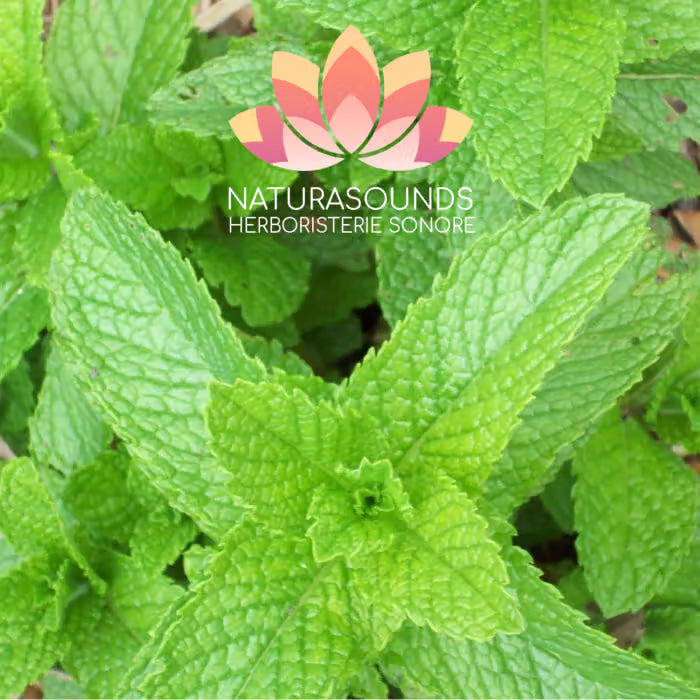
🎧 Medicinal Chant of Mentha × piperita - Peppermint - 429.62 Hz H20 / 30 minutes
🎧 Medicinal Chant of Mentha × piperita - Peppermint - 429.62 Hz H20 / 30 minutes
Regular price
€15,00 EUR
Regular price
Sale price
€15,00 EUR
Unit price
per
Taxes included.
Shipping calculated at checkout.
Couldn't load pickup availability
These sound essential oils are free to listen to and for sale to benefit our research in electrophysiology and sound molecular chemistry.
Thank you for your wonderful participation!
These melodies are produced by the plant itself and its molecular activity, which we measure and record.
I encoded it in .wav format with a sampling frequency of 48Khz in 24 bit and tuned it according to the calculations of the Einstein / Planck equation (h.f = mc2) to the frequency of water at 429.62 Hz. With a duration of 30 minutes for a better immersion with the spirit of the plant.
Enjoy listening!
For any additional information, collaboration/partnership request or other, please send me a message.
contact: renaud@naturasounds.org
--------------------------------------------------------------------------------
Thank you for your wonderful participation!
These melodies are produced by the plant itself and its molecular activity, which we measure and record.
I encoded it in .wav format with a sampling frequency of 48Khz in 24 bit and tuned it according to the calculations of the Einstein / Planck equation (h.f = mc2) to the frequency of water at 429.62 Hz. With a duration of 30 minutes for a better immersion with the spirit of the plant.
Enjoy listening!
For any additional information, collaboration/partnership request or other, please send me a message.
contact: renaud@naturasounds.org
--------------------------------------------------------------------------------
Botanical classification: Lamiaceae family (lamiaceae)
Forms and preparations: drying, tablets, capsules, candies, oils, ointments, lotions, infusions, tinctures, decoctions
Medicinal properties of mint
Internal use
Digestive disorders: effective in case of constipation or diarrhea.
Urinary disorders: diuretic effect.
Cough and cold: soothing.
Pain reliever: joint pain, muscle pain and headaches.
Respiratory problems: effective against bronchitis-like conditions.
Against skin conditions: relieves pain related to insect and animal bites and prevents the formation of cracks.
Digestive disorders (difficult digestion, bloating, flatulence), inflammation of the respiratory system, joint pain, muscle pain or headaches. Skin itching or oral infection.
Other proven therapeutic indications
Prevention of all types of skin inflammation, including eczema. Stimulates the production of digestive juices and bile. It is effective during episodes of gastroenteritis and against neuralgic pain. It also has toning effects.
History of mint use in herbal medicine
Mint is one of the best-known medicinal plants. Archaeologists have found mint leaves in Egyptian tombs. Its use is attested among the Greeks and Romans to relieve pain or purge the sick. Forgotten in the West, it only returned to traditional pharmacopoeia in the 18th century. Since then, it has been one of the first plants to be used intensively by the pharmaceutical industry. Menthol has thus become a classic on pharmacy shelves. Mint is also found in a large number of candies, syrups or as a flavor intended to improve the taste of certain medicines.
Botanical description of mint
Mint is a very aromatic plant that can reach 80 cm in height. It belongs to the Lamiaceae family. Its most used variety in herbal medicine is peppermint. It has a serrated structure with square stems. Its color is green and it is harvested annually. It is sown in spring and harvested in summer. It is found in Europe, Asia and North America.
Composition of mint
Parts used
The aerial part of the plant is commonly used in herbal medicine. For gastroenteritis-type infections, the whole plant can be used.
Active ingredients
The essential oil represents 1.5% of the plant. The most used compounds are menthol (between 35 and 55% of it) and menthone (10 to 40%).
The preparation of mint allows to obtain flavonoids (luteolme, menthoside), as well as phenols and triterpenes. The plant contains enzymes (oxidase and peroxidase), vitamin C and various acids (caffeic, chlorogenic, ferulic, fumaric).
Use and dosage of mint
Dosage
Mint is often offered in the form of industrial or artisanal preparations. These include capsules, lotions, menthol-based creams, tincture or essential oils. For the latter, three daily doses of 2 to 4 drops are generally recommended. For tincture (at 45%), 2 to 5 ml should be used at the same frequency.
For homemade preparations:
- As an infusion: one tablespoon of leaves for 150 ml of boiling water. For one liter of water, weigh 15 g of leaves. Let boil for ten minutes and drink 3 to 4 cups a day.
- As a gargle: 50 g of dried leaves for one liter of water and let boil for ten minutes.
Precautions for use of mint
For internal use, mint should not be given to children under 5 years of age. As for the essential oil, its use must follow a medical prescription. It is important not to give it to children under 12 years of age and pregnant or breastfeeding women. For external use, it is necessary to check that the skin does not present lesions or inflammations. Avoid applications too close to the respiratory tract, due to the risk of spasms.
Contraindications
Mint is not recommended for people suffering from gallbladder problems, as well as for patients who have suffered from severe liver disorders. The same applies to people prone to hypertension.
Side effects
For internal use, mint, consumed in high doses, can cause intestinal disorders and headaches. Risks of hypertension have also been reported, as well as death by action on the medulla oblongata.
Interactions with medicinal plants or supplements
No known interaction.
Interactions with medications
The known dangers of mint result from the limitation of the effects of certain heart medications (calcium channel blockers). It also blocks the elimination of a whole range of medications. The danger comes from the difficult understanding of this phenomenon at present.
Doctor's opinion
Recognized benefits
Mint is an effective plant to fight against flatulence or irritable bowel. It is also recognized for its effectiveness in inhalations, during episodes of cough or colds. Used topically, it reduces muscle pain, headaches and fights minor itching (mosquito bites, eczema, etc.).
Warning
While the administration of herbal teas does not present any danger in principle (except in children under 4 years of age), the use of essential oils must be done with more precautions, following the recommendations of a doctor. For topical use, mint essential oil must be diluted in another vegetable oil to avoid the risk of "burns".
Research on mint
Mint being one of the most used medicinal plants, it has already been extensively studied. Nevertheless, research focuses on its action in relieving intestinal disorders and the effectiveness of its diuretic effects. Scientists are also trying to understand the exact cause of its interaction with most medications, preventing their elimination.
It soothes digestive disorders. Peppermint oil is especially recognized for its antispasmodic action. It stimulates digestion, relieves nausea and vomiting, especially in people suffering from motion sickness.
Peppermint is a powerful antispasmodic thanks to the flavonoids and essential oil (menthol, menthone, menthofuran) contained in its leaves. Bloating, slow digestion and intestinal fermentation are limited by the antiseptic action of its essential oil. Peppermint thus helps to regain a flat stomach. Post-meal heaviness is forgotten.
Peppermint also has antioxidant properties. It thus helps to stimulate the body's natural defenses.
Forms and preparations: drying, tablets, capsules, candies, oils, ointments, lotions, infusions, tinctures, decoctions
Medicinal properties of mint
Internal use
Digestive disorders: effective in case of constipation or diarrhea.
Urinary disorders: diuretic effect.
Cough and cold: soothing.
Pain reliever: joint pain, muscle pain and headaches.
Respiratory problems: effective against bronchitis-like conditions.
Against skin conditions: relieves pain related to insect and animal bites and prevents the formation of cracks.
Digestive disorders (difficult digestion, bloating, flatulence), inflammation of the respiratory system, joint pain, muscle pain or headaches. Skin itching or oral infection.
Other proven therapeutic indications
Prevention of all types of skin inflammation, including eczema. Stimulates the production of digestive juices and bile. It is effective during episodes of gastroenteritis and against neuralgic pain. It also has toning effects.
History of mint use in herbal medicine
Mint is one of the best-known medicinal plants. Archaeologists have found mint leaves in Egyptian tombs. Its use is attested among the Greeks and Romans to relieve pain or purge the sick. Forgotten in the West, it only returned to traditional pharmacopoeia in the 18th century. Since then, it has been one of the first plants to be used intensively by the pharmaceutical industry. Menthol has thus become a classic on pharmacy shelves. Mint is also found in a large number of candies, syrups or as a flavor intended to improve the taste of certain medicines.
Botanical description of mint
Mint is a very aromatic plant that can reach 80 cm in height. It belongs to the Lamiaceae family. Its most used variety in herbal medicine is peppermint. It has a serrated structure with square stems. Its color is green and it is harvested annually. It is sown in spring and harvested in summer. It is found in Europe, Asia and North America.
Composition of mint
Parts used
The aerial part of the plant is commonly used in herbal medicine. For gastroenteritis-type infections, the whole plant can be used.
Active ingredients
The essential oil represents 1.5% of the plant. The most used compounds are menthol (between 35 and 55% of it) and menthone (10 to 40%).
The preparation of mint allows to obtain flavonoids (luteolme, menthoside), as well as phenols and triterpenes. The plant contains enzymes (oxidase and peroxidase), vitamin C and various acids (caffeic, chlorogenic, ferulic, fumaric).
Use and dosage of mint
Dosage
Mint is often offered in the form of industrial or artisanal preparations. These include capsules, lotions, menthol-based creams, tincture or essential oils. For the latter, three daily doses of 2 to 4 drops are generally recommended. For tincture (at 45%), 2 to 5 ml should be used at the same frequency.
For homemade preparations:
- As an infusion: one tablespoon of leaves for 150 ml of boiling water. For one liter of water, weigh 15 g of leaves. Let boil for ten minutes and drink 3 to 4 cups a day.
- As a gargle: 50 g of dried leaves for one liter of water and let boil for ten minutes.
Precautions for use of mint
For internal use, mint should not be given to children under 5 years of age. As for the essential oil, its use must follow a medical prescription. It is important not to give it to children under 12 years of age and pregnant or breastfeeding women. For external use, it is necessary to check that the skin does not present lesions or inflammations. Avoid applications too close to the respiratory tract, due to the risk of spasms.
Contraindications
Mint is not recommended for people suffering from gallbladder problems, as well as for patients who have suffered from severe liver disorders. The same applies to people prone to hypertension.
Side effects
For internal use, mint, consumed in high doses, can cause intestinal disorders and headaches. Risks of hypertension have also been reported, as well as death by action on the medulla oblongata.
Interactions with medicinal plants or supplements
No known interaction.
Interactions with medications
The known dangers of mint result from the limitation of the effects of certain heart medications (calcium channel blockers). It also blocks the elimination of a whole range of medications. The danger comes from the difficult understanding of this phenomenon at present.
Doctor's opinion
Recognized benefits
Mint is an effective plant to fight against flatulence or irritable bowel. It is also recognized for its effectiveness in inhalations, during episodes of cough or colds. Used topically, it reduces muscle pain, headaches and fights minor itching (mosquito bites, eczema, etc.).
Warning
While the administration of herbal teas does not present any danger in principle (except in children under 4 years of age), the use of essential oils must be done with more precautions, following the recommendations of a doctor. For topical use, mint essential oil must be diluted in another vegetable oil to avoid the risk of "burns".
Research on mint
Mint being one of the most used medicinal plants, it has already been extensively studied. Nevertheless, research focuses on its action in relieving intestinal disorders and the effectiveness of its diuretic effects. Scientists are also trying to understand the exact cause of its interaction with most medications, preventing their elimination.
It soothes digestive disorders. Peppermint oil is especially recognized for its antispasmodic action. It stimulates digestion, relieves nausea and vomiting, especially in people suffering from motion sickness.
Peppermint is a powerful antispasmodic thanks to the flavonoids and essential oil (menthol, menthone, menthofuran) contained in its leaves. Bloating, slow digestion and intestinal fermentation are limited by the antiseptic action of its essential oil. Peppermint thus helps to regain a flat stomach. Post-meal heaviness is forgotten.
Peppermint also has antioxidant properties. It thus helps to stimulate the body's natural defenses.